
Article: Best Pakistani Bridal Designers: An Honest Guide for the Bride Who's Done Scrolling

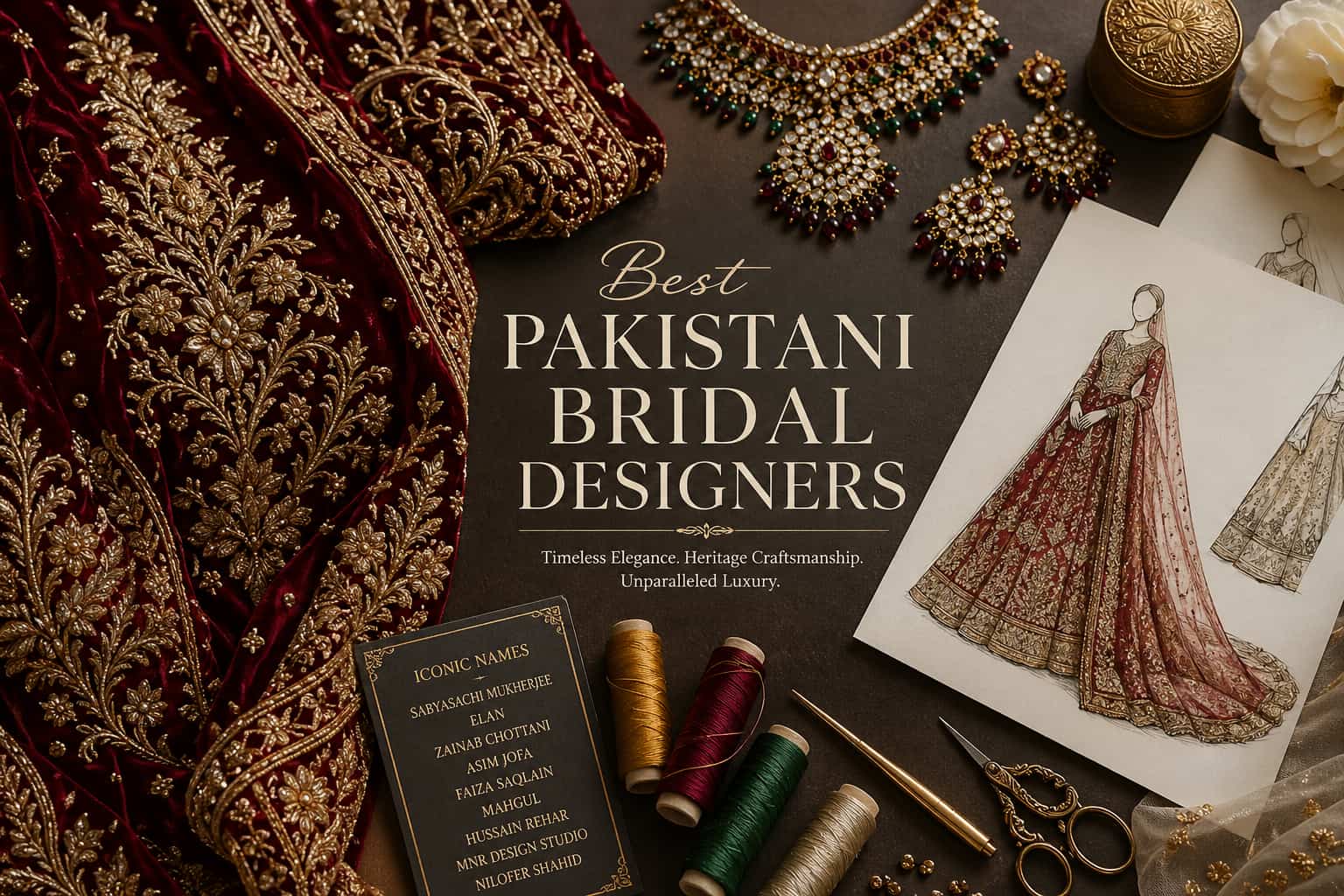
Best Pakistani Bridal Designers: An Honest Guide for the Bride Who's Done Scrolling
There's a particular kind of exhaustion that sets in around the three-month mark of researching Pakistani bridal designers. You've saved hundreds of Instagram posts. You have a folder of screenshots that all blur together. You've read eleven articles that use the phrases "timeless elegance," "intricate embellishments," and "masterpiece of craftsmanship" to describe ten different designers, almost identically.
This isn't that kind of guide.
What follows is a genuine attempt to help you understand what makes each major Pakistani bridal designer actually different from the others. Not just in their aesthetic, but in their price architecture, ordering realities, and the type of bride who will thrive working with them versus who might end up frustrated. Pakistani bridal fashion is among the most sophisticated couture ecosystems in the world, and it deserves better than a recycled list of superlatives.
A word on selection criteria: the designers featured here were chosen based on a combination of industry longevity, recognizable and distinct aesthetic signature, documented international accessibility (for diaspora brides), the quality of their official digital presence, and cross-verified reputation across media, community forums, and peer discussion. Newcomers with buzz but insufficient track records are noted separately toward the end.
Why Pakistani Bridal Wear Occupies Its Own Category
Before we get into individual designers, it helps to understand the structural reasons this fashion tradition is genuinely distinct, not just geographically but technically.
Pakistani bridal wear draws from a convergence of Mughal court embroidery traditions, regional craft guilds (the karigar ecosystem of Lahore and Karachi), subcontinental textile knowledge, and increasingly, a design language shaped by the Pakistani fashion week circuit and global couture exposure. The result is a body of work that can contain, in a single garment, hand-cut mirror work (sheesha), needle-worked gold threadwork (zardozi), silk floss embroidery (resham), beaten silver and gold (gota), and stone-setting techniques adapted from jewelry making.
These are not decorative choices layered onto a standard garment. In many houses, a single lehenga can represent between 1,500 and 3,000 hours of combined craftsmanship, which is why price points that seem shocking to outsiders are, when you break down the labor, entirely rational.
The silhouette vocabulary is equally distinct: the angrakha (an overlapping front with an asymmetric closure), the sharara (wide-legged palazzo trousers with flare from the knee), the gharara (tiered flare from the hip), and the lehenga-choli are not simply "ethnic alternatives" to Western wedding gowns. They represent design problems solved with centuries of tailoring intelligence, garments built to move, to photograph across cultural contexts, and to survive a twelve-hour wedding ceremony.
Understanding this context matters when evaluating designers. A lower price point doesn't mean inferior quality if the construction philosophy is different. A higher price doesn't always mean more embroidery, sometimes it means rarer fabric, a name, or access to a particular design vocabulary.
The Tier Structure You Need to Understand

Pakistani bridal design operates on an informal but fairly consistent tier structure that most guides skip over because publishing actual numbers feels impolite. It shouldn't, because it's the most practically useful piece of information a bride can have.
Ultra-Premium Couture (GBP 1,400–5,700+ | roughly USD 1,800–7,000+): This is the territory of Bunto Kazmi, HSY at his upper end, and Faraz Manan's bespoke work. Prices at this tier reflect exclusivity, the designer's personal involvement in creation, the rarity of materials, and in some cases, simply the brand premium of working with a name that has become part of fashion history. Custom pieces at this level often have waitlists measured in months.
Premium Contemporary (GBP 560–1,400 | roughly USD 700–1,800): Elan, Sana Safinaz's bridal range, Hussain Rehar, and Zara Shahjahan's upper collections live here. This is arguably the most competitive tier — the design quality is exceptional, the brand recognition is strong, and the aesthetic diversity is widest. Many diaspora brides shopping this tier get genuinely extraordinary pieces.
Accessible Luxury (GBP 224–560 | roughly USD 280–700): Brands like Misha Lakhani's secondary lines, and some Faiza Saqlain pieces, occupy this space. It would be a mistake to read this as "budget" at this tier, you're still dealing with significant craftsmanship, real fabrics, and the brand's design language. The concession is usually in volume of hand-embroidery, or a reliance on machine techniques that supplement hand-work rather than replace it.
Note: All price ranges are approximate and shift with seasonal collections, rupee exchange rates, and custom vs. ready-to-wear distinctions. Always verify directly with the brand.
The Designers
HSY — Hassan Shehryar Yasin
Who he is: The most visible Pakistani designer on the global stage. HSY has dressed everyone from Pakistani film actresses to international celebrities, shown at fashion weeks across multiple continents, and built a brand that is simultaneously a couture house, a media presence, and a cultural institution. His self-styled title of "King of Couture" is, unusually, one that the industry doesn't dispute.
The actual aesthetic: HSY's work is architecturally confident. His signature isn't a particular embroidery style or a specific color palette — it's a sense of scale and proportion in how garments are constructed. His brides look towering, even regal, not because of additional embellishment but because of how he thinks about silhouette. His bridal palette runs toward ivory, champagne, gold, dusky rose, and rich jewel tones in heavy organza, raw silk, and tissue. The embroidery is typically dense but not fussy — he favors tonal work, using gold on gold or cream on cream rather than high-contrast color play.
Where he excels: If you are marrying in a large, formal venue — a marquee, a hotel ballroom, a wedding where photographs will be widely shared — HSY's work is engineered for exactly that environment. His pieces have a photographic authority that is difficult to explain until you see it: the garments read across distance in a way that doesn't hold for all designers.
His limitations: HSY is not the right choice for a bride whose vision is playful, folk-influenced, or deliberately unconventional. His design language is aristocratic, and if your aesthetic sensibility runs more toward kantha work, structured minimalism, or maximalist color, you may feel like you're wearing someone else's idea of bridal. His accessibility has also increased significantly as his brand has scaled, which means a price tier that was once genuinely exclusive now competes with more specialized designers at similar points.
For international brides: HSY has the most mature international infrastructure of any Pakistani designer. Virtual consultations are available, and his team has handled international orders with documented regularity. Expect premium shipping costs and a timeline of at least four to six months for any custom work.
Best for: The bride for whom presence and formality are the primary emotional goals of her bridal look.
Bunto Kazmi

Who she is: Possibly the most respected name in Pakistani bridal fashion, among people who actually work in the industry. Bunto Kazmi is notoriously media-shy, does not operate with the social media presence of her peers, and rarely gives interviews. None of that has dimmed her reputation; if anything, the absence of noise around her brand has calcified into a form of legend.
The actual aesthetic: Kazmi works primarily in the language of traditional craft — karchob (needle loom work), kasab (gold thread), and kinari (border embellishment). Her color vocabulary is characteristically rich: deep ruby, burnt sienna, forest green, and the particular shade of warm gold that is almost impossible to replicate in photography. Her garments are heavy in the way that only genuinely worked pieces are heavy — not from volume of fabric, but from accumulated craft.
What distinguishes her from the "traditional" category that other designers also inhabit is precision. Kazmi's finishing is exceptional. The lining, the internal construction, the treatment of edges — these are details that matter to brides who have looked at enough couture to notice them.
Her limitations: She does not offer the contemporary silhouette experimentation of designers like Hussain Rehar, and if your vision is modern fusion, you will not find it here. Her waitlists can be substantial. And her digital presence is minimal — getting to her work often requires connections, travel to her Karachi atelier, or working through a trusted stockist.
For international brides: This is genuinely difficult. Bunto Kazmi's work is not designed with international logistics in mind. Diaspora brides who have successfully ordered from her typically did so through a family member in Pakistan facilitating in-person fittings and communication. If you cannot manage that, she is realistically not accessible to you without extraordinary effort.
Best for: Brides with access to Karachi, a generous budget and timeline, and a clear preference for traditional artistry over contemporary design evolution.
Faraz Manan

Who he is: Faraz Manan is the Pakistani designer most consistently associated with glamour in its most unapologetic form. His clientele skews heavily toward celebrities and high-profile social figures, and this is evident in his design philosophy — which is emphatically not interested in restraint.
The actual aesthetic: Manan favors deep, saturated colors: midnight blue, bottle green, burgundy, rich magenta. His chiffon and crêpe work is legendary in the sense that the drape of his fabrics is distinctly softer and more fluid than most competitors at his tier — he sources material obsessively, which is apparent in the finished work. His embellishment philosophy runs toward crystal, dabka (a fine wire coil embroidery), and intricate resham in metallic finishes, which collectively create a luminous, high-sheen effect that photographs spectacularly in low light.
He is also one of the few Pakistani designers who can credibly do Western-inflected silhouettes, his ball gown interpretations of traditional forms, where a choli bodice meets an enormous lehenga skirt with couture construction, are things that exist nowhere else in Pakistani fashion at this quality level.
His limitations: Manan's aesthetic has a very specific register. It is maximally feminine, unambiguously glamorous, and designed for maximum visual impact. Brides who want subtlety, intellectualism in their garments, or a quieter kind of beauty will feel at odds with his work. Some critics have noted that his collections, across years, have more consistency than evolution. He has found a vocabulary and he speaks it fluently, but he doesn't often deviate from it.
For international brides: Manan has a strong international footprint via trunk shows in the UK and US, and his team fields international orders regularly. Given his celebrity clientele, he has handled the logistics of international fittings and shipments extensively.
Best for: Brides who want to walk into a room and have the room know it.
Elan
Who they are: Elan is a fashion house rather than a single-eponymous designer, founded by Khadija Shah. It has become one of the most influential brands in contemporary Pakistani fashion, partly because of its aggressive presence at fashion weeks and partly because of a design philosophy that has genuinely evolved rather than stagnating.
The actual aesthetic: Elan's bridal work lives in a space that is difficult to categorize, which is precisely its strength. Their collections move between Mughal-influenced opulence and a kind of contemporary severity, sharp silhouettes, unexpected color combinations (they were among the early adopters of combining pastels with black embroidery, a now-ubiquitous trend), and a commitment to surface detail that goes beyond embellishment into texture. Their velvet and raw silk lehengas have an almost architectural quality.
More than any other house, Elan has a talent for creating garments that feel both unmistakably Pakistani and globally legible, which has made them particularly popular with diaspora brides navigating cultural expectations alongside personal style preferences.
Their limitations: Elan's production has scaled significantly, which means their ready-to-wear bridal pieces are genuinely less exclusive than their couture. If you are buying from their prêt-à-porter bridal range, you may encounter the same garment at multiple weddings in any given season. The brand's social media ubiquity has also given their aesthetic a kind of over-exposed quality in certain circles.
For international brides: Elan has good international accessibility via their official website and selected international stockists. Lead times for their luxe and formals range are shorter than pure couture houses, often eight to twelve weeks rather than six-plus months.
Best for: Diaspora brides who want a garment that reads as authentically South Asian to Pakistani guests and as unmistakably beautiful to non-Pakistani guests in equal measure.
Nomi Ansari

Who he is: The "Master of Color" designation that has attached itself to Nomi Ansari across publications is accurate in the specific sense that his engagement with color is genuinely different from his peers, it's not just that he uses brighter shades, but that he uses color structurally, as a design element equivalent to cut or embellishment. A yellow and magenta Nomi Ansari is not a yellow-and-magenta garment; it's a specific argument about how those colors should relate to each other and to the body.
The actual aesthetic: Ansari's work is maximalist, joyful, and explicitly festive. His embroidery vocabulary is traditional, gota, sitara (sequin work), katdana — but applied in non-traditional ways: unexpected placements, asymmetric layouts, color blocking that disrupts conventional pattern-making. His pieces are more likely to evoke Mughal miniature paintings than contemporary runway fashion, and this is entirely deliberate.
He excels at mehndi and event wear perhaps even more than at primary bridal pieces, though his bridal collections have become increasingly sophisticated.
His limitations: His aesthetic is emphatically not subtle. Brides who want something demure, muted, or romantically understated will not find it here. His pieces also require a certain confidence to wear. The color and scale can overwhelm if the bride isn't wholly committed to the vision.
For international brides: Ansari has an established international presence and has participated in diaspora fashion events in the UK and US. His team is experienced with international orders.
Best for: The Mehndi or Mayun outfit for a bride who wants people to remember the event, not just the wedding. Or the primary bridal look for a bride whose entire aesthetic philosophy begins with color.
Zara Shahjahan
Who she is: Shahjahan occupies a position in Pakistani fashion that is somewhat unusual: she is genuinely beloved rather than merely respected. Her aesthetic is softer, more romantic, and more nostalgic than most of her peers, and this has created a dedicated following that responds to her work with an almost personal affection.
The actual aesthetic: Shahjahan works in pastels and neutrals with extraordinary depth. Her ivory is never flat, her pink is never simple. She uses lawn, chiffon, and organza in constructions that feel deliberately handmade rather than machine-perfect, and her embroidery vocabulary draws from regional folk traditions alongside court craft. Phulkari (a Punjabi needle-weave embroidery), hand-block printed elements, and drawn thread work appear in her collections in ways that feel researched rather than decorative.
Her silhouettes skew toward angrakha forms, voluminous dupattas, and the kind of layered construction that makes a garment move beautifully rather than simply hanging well.
Her limitations: Shahjahan's price-to-prominence ratio sometimes surprises brides who expect her work to sit firmly at the ultra-premium tier. She operates largely in the premium-contemporary range, which her devoted followers consider a genuine value, but newer audiences occasionally misread this as a signal about quality. It isn't — her pieces require close examination to appreciate fully, and her work doesn't announce itself the way that HSY or Faraz Manan's does.
For international brides: Shahjahan has good international accessibility. Her Lahore flagship store is a frequent destination for diaspora brides visiting Pakistan, and her team has a functional international ordering process.
Best for: Brides who want to feel beautiful rather than impressive. There is a real difference, and Shahjahan understands it.
Sana Safinaz
Who they are: Sana Hashwani and Safinaz Muneer founded their label in 1989, making Sana Safinaz one of the oldest continuously operating fashion houses in Pakistan. That longevity has produced a brand with extraordinary range. They operate across prêt-à-porter, luxury lawn, formal wear, and bridal couture, which is both a strength and a source of confusion.
The actual aesthetic (bridal): Sana Safinaz's bridal work has a sophistication that is sometimes underappreciated because their brand has so many other reference points. Their couture pieces, when they commit to a silhouette, have an architectural clarity that is distinct from their competitors — clean lines, considered negative space in the embroidery layouts, and a palette that tends toward cool-toned regality: ice blue, deep plum, silver, charcoal. Their fabric sourcing is exceptional; their jamawar and kamdani pieces in particular are benchmarks for the category.
Their limitations: The breadth of the brand creates perception challenges. Buying a Sana Safinaz lawn suit is a fundamentally different transaction from commissioning a Sana Safinaz bridal piece, and the name being attached to both means that some brides discount the bridal work in ways they shouldn't. Their bridal couture also tends to be less flamboyant than competitors, which means it can underwhelm in the social media presentation that now shapes so much bridal decision-making.
For international brides: Sana Safinaz has among the best-developed international retail infrastructure of any Pakistani fashion house — multiple international stockists, a functional e-commerce platform, and a customer service system that handles international orders with competence. Lead times are relatively shorter than pure couture houses.
Best for: Brides who value structured sophistication and are comfortable investing in a garment that reveals its quality through proximity rather than distance.
Hussain Rehar
Who he is: Rehar is the most consistently interesting emerging voice in Pakistani bridal fashion, "emerging" being a relative term for someone who has been producing runway-worthy work for several years now, but who hasn't yet reached the institutional dominance of the older names on this list.
The actual aesthetic: He operates in a genuinely experimental space. His silhouettes can be severe in a way that reads as fashion-forward rather than bridal by conventional standards, structured shoulders, unusual hem treatments, the integration of contemporary tailoring techniques into traditional garment forms. His color work is bold but intellectual: he uses color to create mood rather than impact, which is a meaningful distinction. Deep amber against ivory, dusty mauve against antique gold.
He has also done more than any contemporary Pakistani designer to interrogate what bridal can mean. His campaigns and collections have featured diverse models, explored non-traditional silhouettes, and pushed back against the implicit conservatism of the category.
His limitations: He is genuinely less accessible than the established names — his production volume is lower, his waitlists can be significant, and his team has less experience with the international ordering logistics that houses like Sana Safinaz or Elan have refined over decades. His aesthetic, while critically praised, may also feel alienating to brides whose families have strong opinions about what a bridal outfit should look like.
For international brides: Accessible but with more friction than the older houses. Direct communication with his team is necessary.
Best for: The bride who consumes fashion actively and wants her bridal look to be a statement about where Pakistani aesthetics are going, not just where they've been.
Faiza Saqlain
Who she is: Saqlain has built a significant following through a combination of accessible price points and a design sensibility that bridges traditional and contemporary aesthetics without the jagged seams that this bridging often produces. She is particularly popular with younger brides shopping within Pakistan and with diaspora brides on mid-range budgets.
The actual aesthetic: Her embroidery vocabulary is primarily floral, stylized botanical motifs in resham and gota, and her silhouettes tend toward the draped and fluid rather than the structured. Her palette runs warm: terracotta, saffron, marigold, rose gold. The overall impression is festive and warm rather than regal or architectural.
Her pret bridal range offers considerably more value than most competitors at equivalent price points — the garments are more finished, more thoughtfully constructed, and easier to accessorize than what you typically find in this tier.
Her limitations: Saqlain's work, at its weaker moments, can feel slightly derivative of the aesthetic trends set by larger houses. The design sensibility is skilled but not singular in the way that Shahjahan's or Kazmi's is.
For international brides: Her digital infrastructure is solid, and she has participated in international trunk shows. A workable option for diaspora brides who cannot travel to Pakistan.
Best for: Brides on premium-contemporary budgets who want a well-constructed, beautiful garment without the waitlist and complexity of the top-tier couture houses.
Misha Lakhani
Who she is: Lakhani is perhaps the Pakistani designer most committed to the concept of wearable luxury — garments that are exquisitely made but also exist in conversation with a woman's actual life rather than a purely ceremonial register. This philosophy has made her a favorite among a certain kind of culturally fluent, internationally educated Pakistani bride.
The actual aesthetic: Lakhani's signature is the integration of heritage craft techniques into contemporary forms. She collaborates with traditional artisans — often from communities where specific embroidery techniques are disappearing — and translates their craft into garments that feel both deeply rooted and cosmopolitan. Her mirror work, sindhi kantha, and hand-block printed pieces have an authenticity that is difficult to fake because she is genuinely engaged with the artisan communities producing them.
Her silhouettes are clean, sometimes almost austere. The craft is the point, not the drama of the garment's construction.
Her limitations: The restrained aesthetics that her dedicated followers love can read as underdressed to families with traditional expectations. She is also less oriented toward the bridal market specifically — her work spans occasion wear broadly, and her bridal pieces require a bride who has done the cultural work of understanding why a quieter garment can be the more powerful choice.
For international brides: Lakhani has good international accessibility and her ethical positioning resonates strongly with diaspora brides who want their purchase to support artisan communities rather than purely industrial production.
Best for: Brides who want their Walima or secondary event outfits to reflect a particular set of values alongside beauty.
Saira Shakira
Who they are: This design duo — Saira Rizwan and Shakira Sajid — represents one of the more interesting recent success stories in Pakistani fashion, building a strong following through strategic social media presence and a design sensibility that is confident without being derivative.
The actual aesthetic: Shakira and Rizwan work in a contemporary couture register that takes strong influence from Mughal motifs but renders them with a graphic confidence that feels current. Their embroidery layouts are bold — large-scale motifs, high-contrast color combinations, and a theatrical use of sequins and crystals that catches light dramatically. Their silhouettes are often voluminous and formal.
For international brides: Among the better-equipped smaller houses for international orders. Their digital presence is strong and their team communicates consistently.
Best for: Brides who want contemporary-feeling Pakistani couture with strong visual impact, in the premium-contemporary price range.
Ammara Khan
Who she is: Khan is known for producing work that is simultaneously maximalist in its embellishment and rigorous in its construction — a combination that is harder to achieve than it sounds. Her bridal pieces feel fully considered rather than simply decorated.
The actual aesthetic: Khan works primarily in rich, complex color combinations and uses multi-technique embroidery — combining zardozi, naqshi (a fine needle-painting technique), and thread work in layers that create depth and visual complexity. Her garments repay close examination in a way that some flashier designers' work does not.
For international brides: A functioning international ordering process exists, though her team is smaller than the major houses and communication requires more patience.
Best for: Brides who are willing to invest time in close collaboration with a designer to get something genuinely distinctive.
Side-by-Side Comparison
| Designer | Aesthetic Register | Price Tier | Intl. Accessibility | Best Occasion |
|---|---|---|---|---|
| HSY | Formal Couture | Ultra-Premium | ✓✓✓ Excellent | Barat / Nikkah |
| Bunto Kazmi | Traditional Heritage | Ultra-Premium | ✗ Very Limited | Barat (in Pakistan only) |
| Faraz Manan | Glamorous Couture | Ultra-Premium | ✓✓ Strong | Barat / High-profile events |
| Elan | Contemporary-Global | Premium | ✓✓✓ Excellent | Barat / Walima |
| Nomi Ansari | Colorful Maximalism | Premium | ✓✓ Strong | Mehndi / Mayun |
| Zara Shahjahan | Romantic Heritage | Premium | ✓✓ Good | All events |
| Sana Safinaz | Sophisticated Formal | Premium | ✓✓✓ Excellent | Nikkah / Walima |
| Hussain Rehar | Avant-Garde Fusion | Premium | ✓ Limited | Barat / Statement events |
| Faiza Saqlain | Warm Contemporary | Accessible Luxury | ✓✓ Good | All events |
| Misha Lakhani | Artisan Minimal | Accessible Luxury | ✓✓ Good | Walima / Secondary events |
| Saira Shakira | Modern Theatrical | Premium | ✓✓ Good | Barat / Formal events |
| Ammara Khan | Embellishment-Focused | Premium | ✓ Limited | Barat |
The Practical Guide: How to Actually Order

The information in this section is what most bridal guides omit because it is unglamorous — but it is the difference between a successful experience and a genuinely stressful one.
The Timeline Reality
For custom couture (Bunto Kazmi, HSY at the bespoke level, Faraz Manan): You need a minimum of eight months. Twelve is better. This is not a vendor being precious about their work — it reflects the actual labor time required to produce a heavily hand-worked garment, plus the time for fittings, revisions, and the logistics of international shipping if applicable.
For premium-contemporary houses (Elan, Sana Safinaz, Zara Shahjahan, Hussain Rehar): Four to six months for custom orders is the realistic window. Some of these houses also offer semi-ready options that can be modified in eight to twelve weeks if you're flexible on the base design.
For accessible luxury tier (Faiza Saqlain, Misha Lakhani's prêt range): Two to four months is workable for existing designs with modest modifications.
Virtual Fittings: What Actually Works
Every designer now offers some form of virtual consultation, but the quality varies significantly. What works: fabric selection, color consultation, broad silhouette discussions. What doesn't work well: fit. Pakistani bridal garments are intensely structural and require actual measurements taken by someone who understands how the garment should sit — not the measurements you take yourself with a YouTube tutorial.
If you are ordering internationally, the most reliable approach is to have one trusted person in Pakistan (family, a fixer, or a professional stylist who does this regularly) attend fittings on your behalf with a detailed brief and measurements you've had taken professionally in your city.
Understanding the Payment Process
Established houses typically work on a 50% deposit at order confirmation and 50% before shipping. This is standard practice and entirely reasonable given the bespoke nature of the work. Be cautious of any arrangement that asks for full payment upfront without established reputation, or that cannot provide a formal order confirmation.
Customs and Duties
This is the fee that surprises international brides most regularly. A bridal outfit shipped from Pakistan to the UK, US, or Europe is subject to customs duties that can add 10–25% to the garment's value depending on country of import and declared value. Ask your designer how they typically handle customs declarations, and research the duty rates for your destination before finalizing your budget. The total landed cost of a PKR 400,000 outfit can be substantially higher than the headline price.
What to Have Ready Before Your First Consultation
- A clear brief photographs of pieces you've loved, your venue, the time of day, your approximate guest count (it affects how formal you need to be), and your family's expectations if these differ from your own preferences.
- Professional measurements taken recently bust, waist, hip, shoulder-to-shoulder, shoulder-to-waist, waist-to-floor, and if it's relevant, arm length.
- A realistic budget that includes the garment, shipping, duties, and local alterations (because even well-made garments require local finishing touches after international transit).
- A decision on whether you're open to ready-to-wear with modifications or specifically require a custom piece. The former is more reliable for international orders; the latter more personal.
Beyond the Bespoke: The Rest of the Wardrobe
The reality of a Pakistani wedding is that your Baraat or Walima outfit is just the anchor. You still have to dress for the dholkis, the post-wedding dinners, and build a trousseau that actually makes sense.
If you are navigating tight timelines or simply exhausted by custom waitlists, your best strategy is curated luxury prêt. Here is how to fill the gaps in your wardrobe without waiting six months:
-
The Pre-Wedding Circuit: For mayuns and mehndis, you want visual impact without the heavy structural weight. Shop our Mehndi Collections for vibrant gota work and color-blocking that channels high-energy couture without the bespoke timeline.
-
The Post-Wedding Trousseau: You need finished, sophisticated pieces for formal family dinners. Browse our Luxury Wear for delicately embroidered silhouettes that read as expensive close-up.
-
The Winter Necessity: If your dates fall between November and February, sheer fabrics are a mistake. Our Premium Velvet Collections provide the necessary heavy drape and rich jewel tones.
-
The Bridal Party: For coordinating family looks, our Festive Wear offers accessible, ready-to-wear luxury that photographs beautifully but knows its place next to the bride.
Frequently Asked Questions
How do I know if a Pakistani designer ships internationally?
The clearest signal is whether the designer has an active English-language section on their website that includes international shipping information, and whether their social media shows non-Pakistani weddings. A second-best signal is community forums r/DesiWeddings has genuine community threads discussing specific international ordering experiences with various houses. Always read reviews or testimonials that are dated within the last twelve months.
What is the current dominant bridal trend in Pakistani fashion?
Several simultaneous trends are active. In silhouette, there is a return to the gharara and sharara forms after years of lehenga dominance. In color, the ivory-and-gold palette that dominated for nearly a decade is being challenged by deeper, more saturated tones (burgundy, emerald, deep blue) for primary bridal events. In embroidery, there is increased interest in artisan craft traditions — phulkari, sindhi mirror work, hand-block print — as a reaction to the hyper-industrial quality of mass-produced embellishment. And perhaps most interestingly, the designer ensemble concept (where the top, skirt, and dupatta are all explicitly from one collection rather than assembled) is giving way to more individualized styling, where brides mix a designer piece with vintage jewelry or unexpected accessories.
What is the difference between bespoke and made-to-order?
Bespoke means the garment is designed specifically for you — you're involved in the design process, choices are made for your body and preferences, and no identical garment will exist. Made-to-order means an existing design is produced in your measurements with possible modifications to color or minor elements. Most international orders from Pakistani designers are made-to-order, not truly bespoke, regardless of how the term is used in marketing.
How do I communicate clearly with a designer team when English isn't their primary language?
Most major design house teams are entirely fluent in English. The challenge is more about precision than language — visual references communicate better than written descriptions. If you write "I want deep embroidery on the border," share a photograph of the depth you mean. If you write "traditional silhouette," share examples because the word means different things to different people. And confirm, in writing, every specification before production begins.
Are Pakistani bridal outfits suitable for non-South Asian wedding traditions?
Increasingly, yes not just for brides with South Asian heritage but for any bride attracted to the aesthetic. Several of the designers on this list have dressed non-South Asian brides for non-traditional ceremonies, and the silhouettes, particularly the lehenga-choli and sharara, translate beautifully to a wide range of settings. The most relevant consideration is likely the weight of the garment and the formality of the event rather than any cultural restriction.
How to Make Your Final Choice
The honest answer is that once you've narrowed down to two or three designers in the right tier and aesthetic range, the final decision should be emotional. You will look at the photographs of one designer's work and something will happen internally that doesn't happen with the others. Trust that.
The practical scaffolding to get there:
Start with tier, then aesthetic. Decide what you can genuinely afford including the landed cost with duties and shipping before you fall in love with a garment in the wrong tier. This saves real heartbreak.
Look at brides, not editorials. Campaign photographs are styled to maximize the garment's visual drama. They are lit, styled, and post-processed to present an idealized version of the piece. Find real brides in the same garment — on Instagram with the designer tagged, on Reddit, on community forums — and look at how the piece reads in an actual wedding environment.
Attend a trunk show if you can. The major houses do annual trunk shows in London, Toronto, New York, Houston, and Dubai. These are the single most valuable research activity available to an international bride — nothing substitutes for handling the fabric, seeing the embroidery depth, and understanding the true color.
Read the small print on alterations and returns. Pakistani bridal houses almost universally do not accept returns on custom orders. Understand what alterations they will and won't make after delivery, and what your recourse is if the garment arrives significantly different from the approved sample or brief.
Final Thoughts
Pakistani bridal fashion is in a genuinely interesting period — established names are facing competition from younger designers with global training and fresh perspectives, traditional craft is being rediscovered and elevated, and diaspora brides have made the category more internationally visible than it has ever been. The range of genuinely excellent options is extraordinary.
What it rewards is research done with specificity rather than breadth. A bride who has looked at two hundred generic "best designers" listicles is often less equipped to make a decision than a bride who has spent two focused hours reading a particular designer's interview archive, studying the construction details in their recent collections, and watching how their team responds to comments and queries on social media.
The designers on this list each represent a real and defensible choice for a particular kind of bride with a particular vision. None of them is universally the best, and the one that makes you feel most like yourself — in your full complexity, not just your bridal presentation — is almost certainly the right answer.
All price ranges quoted are approximate as of 2025–2026 and subject to change. Exchange rates, seasonal collection pricing, and custom modifications significantly affect final costs. Always verify directly with the designer or their authorized representatives before committing to an order.