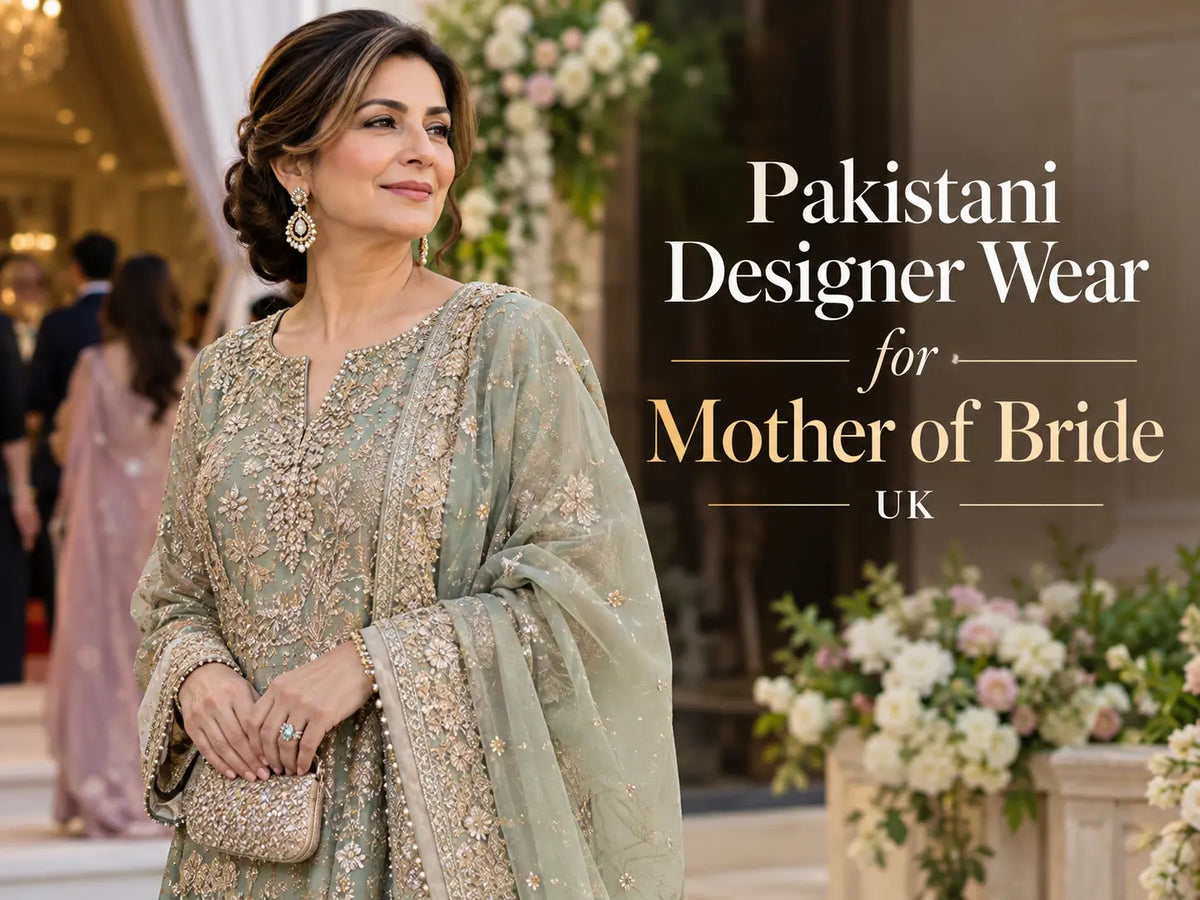
Pakistani Designer Wear for Mother of Bride UK
The mother of the bride is often very important at a Pakistani wedding. She welcomes guests, takes part in family traditions, helps organize family members, and may be on her feet for a long time. Her outfits should look nice, match the bride, and be comfortable for long days. This guide talks about each event, color choices, fabrics, quality checks, stitching options, budgets, and ordering.
 The mother of the bride should complement the bride's look, not compete with it.
Quick answers
- What should the mother of the bride wear? Elegant formal outfits in rich jewel tones or soft pastels, less heavily embellished than the bride's outfit.
- Best silhouettes? Long shirts with straight trousers or a sharara, pishwas, gharara or a saree.
- Which colours? Shades that complement the bride's outfit, but not her exact colour.
- How many outfits? One outfit per main event is common, although the total depends on the family's schedule and budget.
- When should I order? Ideally three to four months before the wedding, once the bride has chosen her main outfits.
In this guide
- Dressing for the host's role
- What to wear for each event
- Three example looks
- Colour coordination guide
- Coordinating with the groom's mother
- Silhouettes for comfort
- Fabrics for UK weather and venues
- Dupattas and head coverings
- Jewellery, shoes and bags
- How to judge quality
- Stitched or unstitched?
- Total wardrobe budget
- Ordering checklist and timeline
- Wedding-day logistics
- FAQs
- Contact us
Dressing for the host's role
The mother of the bride is both a host and a guest, so her outfits should fit both roles.
- You may stand and move for hours, so choose outfits that are easy to walk, sit, and hug family in, as you may be standing and moving for hours.
- You may take part in rituals, like the Mehndi, make sure sleeves and dupattas don’t get in the way.
- You will appear in many family photographs, so your colour should look good next to the bride.
- You will greet elders and guests, so the outfit should suit your family's modesty.
What to wear for each event
Traditions differ between families, so take these suggestions to your own schedule.
| Event | Style | Colours | Embellishment |
|---|---|---|---|
| Dholki or Mayun | A simple formal outfit or a luxury lawn suit | Yellow, mustard or bright festive shades | Light |
| Mehndi | Long shirt with a sharara, or a gharara | Green, orange, pink or the family's chosen theme | Light to medium: gota, mirror work, resham |
| Nikkah | Elegant long shirt or pishwas | Ivory, champagne, blush or soft pastels | Medium and refined |
| Baraat | Formal long shirt, gharara or saree | Rich jewel tones such as emerald, wine, navy or teal | Medium to high, but less than the bride's |
| Walima | Graceful formal outfit or gown-style pishwas | Dusty rose, mauve, silver, sage or pastel blue | Medium |
For a fuller guide of each function, read Pakistani Wedding Events Explained.
Three example looks for different tastes
Every mother has her own way to carry, comfort needs and preferences. These examples are starting points, not rules.
| Style | Silhouette | Fabric and embroidery | Shoes | Jewellery |
|---|---|---|---|---|
| Understated elegance | Long shirt with straight trousers | Raw silk with tonal threadwork | Low block heels | Pearl studs and a fine necklace |
| Traditional embroidery | Long shirt with a gharara | Velvet or organza with zardozi and dabka | Embellished khussas | Gold-tone jhumkas and kangan |
| Contemporary formal | Gown-style pishwas or a draped saree | Chiffon or organza with sequin or crystal detailing | Metallic block heels | Silver-tone statement earrings |
Colour coordination guide
Choose your dress after the bride has chosen hers. The bride's and family's preferences always come before the ordinary rules like these.
| Bride wears | Suggested colours for the mother | Test carefully |
|---|---|---|
| Red | Emerald, navy, teal, deep gold | Bright red, coral |
| Maroon | Bottle green, champagne gold, dusty rose | Wine, burgundy |
| Ivory | Blush, sage, powder blue, mauve | White, cream, pale gold |
| Gold | Emerald, navy, deep pink, plum | Mustard, champagne |
| Pink | Mint, lilac, teal, silver grey | Fuchsia, hot pink |
| Pastels | A deeper shade from the same family, or sage or mauve | The bride's exact pastel |
Check the stage decor to ensure your outfit stands out in photos. Some families avoid black and white at weddings, so if unsure, pick another color.

Coordinating with the groom's mother
A quick chat between the two mothers before shopping can help avoid matching colors in important family photos.
- Colours: don’t choose the same shade for the same event.
- Formality: aim for similar formality so neither outfit looks odd.
- Hosting: the family hosting may want a more formal dress code based on their preferences.
Silhouettes for comfort
Choose a style that feels comfortable and allows movement. A long shirt with straight trousers is easy to walk in. A sharara or gharara adds fun movement for the Mehndi and Baraat. A pishwas is elegant and roomy, and a saree is nice for the Baraat or Walima if you can walk in one. If you need help moving, ankle-length hems are easier than floor-length ones.
Fabrics for UK weather and venues
- Winter weddings: velvet or raw silk looks rich and keeps you warm.
- In heated halls, a full velvet outfit might be too warm, so consider lighter fabrics like organza or silk with a removable shawl.
- Summer and marquees: chiffon, organza, and light silk are cooler and flow nicely.
Dupattas and head coverings
- If you cover your head for the Nikkah, duas, or rukhsati, choose a soft, lightweight dupatta in chiffon or organza.
- Secure it with pins at the crown and shoulders.
- If you wear a hijab, pick a color from the embroidery and drape the dupatta over one shoulder.
- Choose the sleeve length you prefer. Most outfits can have full or three-quarter sleeves.
 A soft, lightweight dupatta stays in place when you cover your head.
Jewellery, shoes and bags
- Keep jewellery lighter than the bride's. A statement necklace or earrings is a good choice. Browse our jewellery collection.
- Match the jewellery's metal tone to the embroidery: gold with gold thread and silver with silver tilla.
- Choose comfortable shoes, like block heels, wedges or embellished khussas, and bring a pair of flats.
Our accessorising guide explains how to contrast jewellery to necklines and embroidery.
How to judge designer quality before buying
Check product details carefully, as photos may not show everything.
- Lining under sheer or embroidered areas
- Embroidery weight and how it drapes
- Generous seam allowance for alterations
- Fabric transparency in daylight
- Strong zips, hooks and buttons
- A finished dupatta edge or border
- Embellishments that will not snag
- Even stitching on the reverse side
Our Pakistani Bridal Embroidery Guide explains how to judge handwork.
Stitched or unstitched?
| Option | Measurements | Alteration flexibility | Lead time | Confirm before ordering |
|---|---|---|---|---|
| Ready-to-wear | Standard size only | Limited to the seam allowance | Shortest | The size chart and return terms |
| Bespoke stitched | Your full measurements | Made to your fit and preferences | Allow extra time for stitching | Sleeve length, shirt length and the stitching timeline |
| Unstitched, stitched by your tailor | Taken by your tailor | Highest | Depends on your tailor's availability | Fabric quantity and your tailor's dates |
Every Kifat order includes free custom stitching. Ask about adjustable features like extra seam allowance, or an easy zip, and use our size chart.
Total wardrobe budget
Outfit ranges are based on Kifat listings checked in October 2026. Shoes, jewellery and alterations are visual estimates, and all prices varies.
| Wardrobe | Outfits | Shoes | Jewellery | Alterations | Estimated total |
|---|---|---|---|---|---|
| Two outfits (Nikkah and Baraat) | About £490 | £60 | £80 | £40 | About £670 |
| Three outfits (Mehndi, Baraat and Walima) | About £700 | £80 | £120 | £60 | About £960 |
| Five outfits (all main events) | About £1,070 | £100 | £150 | £100 | About £1,420 |
Current Kifat prices range from about £64 to £850, with free UK delivery on orders over £100.
Ordering checklist and timeline
Whether your outfit is in the UK or ordered from Pakistan, confirm these points before paying:
- Whether the item is in stock or made to order
- The dispatch date and the expected arrival date
- Tracking details
- Any customs charges and who pays them
- Return and exchange terms
- Who handles alterations after delivery
4 to 6 months before
Once the bride picks her main outfits, agree on colors with the family and the groom's mother.
3 to 4 months before
Order your Baraat and Walima outfits early for stitching and delivery.
6 to 8 weeks before
Buy shoes and choose jewelry.
2 to 3 weeks before
Do your final fitting while wearing your wedding shoes and arrange any needed changes.
If you're short on time, check our ready-to-ship collection and confirm the delivery date on WhatsApp before ordering.
Wedding-day logistics
Planning ahead makes moving between home, car, venue, and photos easier.
- A coat or shawl, and somewhere to store it
- An umbrella and a garment cover for rain
- A light layer for heated or cool rooms
- Hems checked for safe use on stairs
- Changing facilities confirmed if you change outfits
- Spare safety pins and dupatta pins
- A small sewing kit and fashion tape
- Flat shoes or khussas
- Waterproof mascara for the rukhsati
- Any regular medication and a water bottle
Ask a sister or close friend to check your dupatta before the main photos. Our wedding photography guide has more tips.

Frequently asked questions
Should the mother of the bride match the bride's colours?
Complement rather than match. Choose a shade from the bride's embroidery or a colour that sits well beside hers, but avoid her exact colour.
Can I wear a long shirt and trousers instead of a lehenga?
Yes. An embroidered long shirt with straight trousers or a sharara is one of the most popular and practical choices for mothers of the bride.
Is a saree appropriate for the mother of the bride?
Yes, especially for the Baraat or Walima. Choose a fabric that drapes well, such as chiffon or silk, and practise walking and sitting in it before the day.
What if the groom's mother has chosen a similar colour?
Talk early. Agree different shades for each event, or keep the same colour family in clearly different tones, such as emerald and sage.
Can I wear the same outfit to two events?
You may prefer a different outfit for each main event, although rewearing or restyling an outfit with a new dupatta and jewellery is also an option.
Can my outfit be stitched with full sleeves or a longer shirt?
Yes. With bespoke stitching, you can usually request full sleeves, a longer shirt or other changes. Mention them when you send your measurements.
Final verdict
The best outfit for the mother of the bride is elegant, comfortable, and matches well. Pick your outfit after the bride picks hers. Talk to the groom's mother about colors, check the quality and stitching, and set your budget and order dates early. Then you can enjoy your daughter's wedding with confidence.
Find your mother of the bride outfits
Shop 28,000+ original outfits from 200+ Pakistani designers, with free bespoke stitching, free UK delivery on orders over £100 and DHL Express worldwide.
Shop formal wear Shop ready to shipRead next: Best Pakistani Designer Boutiques in London · Pakistani Bridal Trousseau Shopping Guide UK
Contact us
Not sure what to wear alongside your daughter? Send us a photo of the bride's outfit and your event dates, and we will suggest colours, styles and sizes that suit you. WhatsApp is fastest.